
inKind
inKindFood & Drink
4.81.52K Reviews
- Version
- 6.77.0
- Installs
- 500.00K
- Age Rating
- Everyone
Screenshots
Our Review of inKind
 Analysis by Appyee
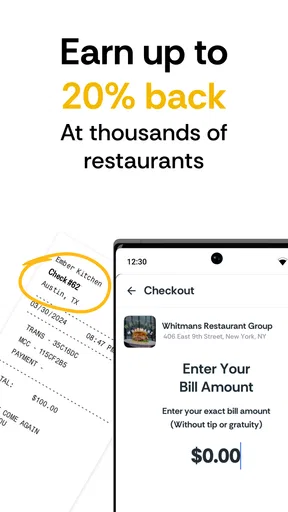
I usually judge a restaurant-rewards app by what happens after the first attractive offer. It is easy to feel impressed when an app promises money back, but the real question is whether it still helps when I am choosing a place for an ordinary lunch, splitting a dinner, or returning to a favorite restaurant weeks later. That is where inKind makes a reasonably strong case. It is a free Food & Drink app from inKind that lets me pay through the service at participating restaurants and potentially receive up to 20% back, with the practical appeal depending heavily on whether its restaurant selection fits my routine.
The app has been available since Aug 13, 2018, and its current version is 6.64.0. It is suitable for Everyone, works from Android 7.0 onward, and has passed the stage where it feels like a brand-new experiment. Its 4.8 average from around 15,000 ratings and more than 500,000 installs suggest that many people find the basic idea useful. I would not treat those numbers as a guarantee of a perfect experience, though. A restaurant-payment app succeeds locally: it can be excellent in one person’s neighborhood and nearly irrelevant in another.
What using inKind feels like during the first week
My first impression is that the service is most appealing when I already have a restaurant in mind. Instead of browsing aimlessly for a discount, I can think about where I was going to eat and then check whether paying with inKind makes sense there. That small change in behavior matters. It keeps the app from becoming another stream of offers that I open, scroll through, and forget.
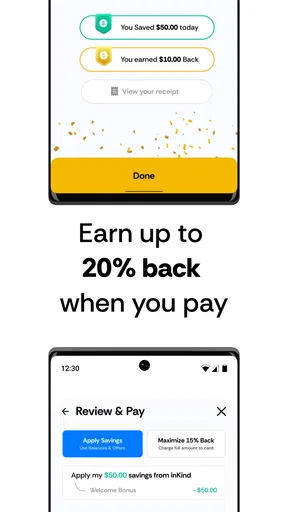
The strongest early use case is a planned meal at a participating restaurant. I can look for a suitable option, decide whether the available return justifies using the app, and then pay through inKind rather than treating the reward as a separate coupon to remember later. The store promise of up to 20% back is attractive, but I see it as a ceiling rather than an automatic result for every order. I would always inspect the offer and the payment details before assuming the final benefit.
That habit is especially important when I am dining with other people. A group bill can make a reward feel more meaningful, but it also introduces practical questions: who is paying, whether the whole bill can be handled in the app, and how the group will settle up afterward. I would decide this before everyone orders, not while the server is waiting. If one person is covering the meal, inKind is simpler; if everyone expects to pay separately, the usual card or payment app may create less conversation.
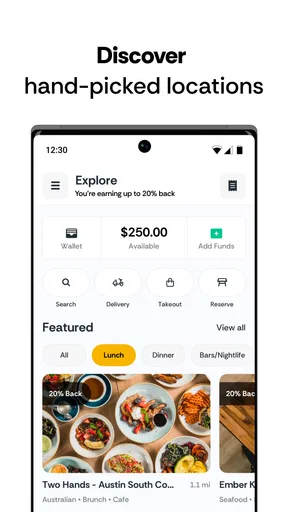
One useful first-week workflow is to use the app as a restaurant shortlist rather than as a general-purpose dining guide. I can check participating places before choosing where to meet, then compare the likely reward with distance, menu, and convenience. This prevents the common mistake of traveling farther or choosing a less suitable restaurant merely to chase a percentage. The reward should improve a meal I already want, not dictate every meal I eat.
The payment step is also where I would pay the closest attention. Restaurant rewards are only valuable if the transaction is completed correctly. I would confirm that I am using the intended restaurant, review the amount before submitting payment, and keep the receipt until the transaction appears settled. That is not glamorous advice, but it is the kind of routine that prevents a small reward from turning into a frustrating support issue.
For someone who eats out regularly, the first week can feel rewarding because the app gives an existing habit a visible financial angle. It is more compelling than a generic restaurant-discovery app if I already visit places included in its network. Someone who rarely eats out, cooks nearly every meal, or lives far from participating restaurants will probably feel less immediate value. In that situation, the app may be free to install but still costly in attention if it keeps tempting the user to spend more than planned.
Where the early appeal is genuinely practical
I like that the concept connects discovery and payment instead of asking me to clip a coupon, remember a code, and explain it at the register. That reduces one layer of friction. It also makes the reward easier to associate with a specific occasion, which is useful when I am organizing a dinner and want to estimate the total cost in advance.
Another non-obvious advantage is decision timing. I can check the app before leaving home, when I still have time to compare options, rather than waiting until the bill arrives. That makes it less likely that I will choose a restaurant impulsively just because an offer happens to appear. I would treat the app as part of planning, not as something to operate hurriedly at the table.
There is a trade-off, however. A restaurant list can influence my choices in ways that are not always financially sensible. If a participating restaurant is more expensive than my normal option, a percentage back may only soften the difference. I would compare the final expected spend, not the reward percentage in isolation. A smaller benefit at a convenient, reasonably priced restaurant is often better than a larger benefit attached to an unnecessarily expensive night out.
Whether the value survives from month to month
After the novelty fades, inKind needs to earn a place in my routine through repeated usefulness. I would keep it if it consistently appears in the planning stage of meals I was already going to buy. That means the restaurant coverage near me matters more than the headline percentage. A modest return at familiar places can become meaningful over time; a generous-looking offer at restaurants I never visit is just digital clutter.
The best long-term pattern is simple: before making a reservation or heading out, I check whether inKind changes the best choice. If yes, I use it. If no, I do not force the decision. This keeps the app from encouraging extra restaurant visits merely to justify its installation. It also protects the budget from the psychological trap of spending money to “earn” money back.
For couples and families, the recurring value can be easier to notice because restaurant spending happens regularly and bills are larger than a solo snack. A household could make the app part of its weekly planning routine, especially when the same participating restaurants remain convenient. For occasional diners, the benefit is more episodic. They may open it before birthdays, trips, or planned nights out, then ignore it between those occasions.
I would not use inKind as my only way to find restaurants. Maps, personal recommendations, reservation tools, and direct restaurant websites can be better for checking hours, atmosphere, menus, accessibility, and last-minute availability. The app’s role is narrower and clearer: it helps connect a participating restaurant visit with payment and a possible return. Keeping that role in mind makes the experience less disappointing.
Compared with ordinary credit-card rewards, inKind is more specific. A card may offer a broader reward across many purchases without asking me to change where I eat, while inKind can be more useful when its restaurant network matches my habits. Compared with paper coupons or restaurant-specific loyalty programs, it may reduce the need to track separate promotions, but it also makes me dependent on the app’s participating locations and payment flow. I would choose between them based on convenience, not on the largest advertised percentage.
A practical monthly check is to review whether I am using the app naturally or rearranging plans around it. If I have used it several times for meals I would have purchased anyway, it is earning its space. If I keep opening it, changing restaurants, or spending extra time comparing offers without making a better decision, the recurring value is weaker. That self-check is more useful than assuming every available reward is worth claiming.
Small habits that make the reward more worthwhile
I would check the offer before ordering, not after. I would also decide who will pay before a group meal begins, because the financial benefit is easier to manage when one person handles the inKind transaction and the group settles the split separately. Finally, I would avoid treating the maximum return as a normal expectation. Thinking in terms of the actual offer shown for the specific restaurant keeps the budget realistic.
Another helpful habit is to compare the entire outing rather than the restaurant bill alone. Transportation, parking, delivery alternatives, and the time required to reach a participating place can outweigh a reward. This is particularly relevant when two restaurants offer similar food but only one appears in the app. The better choice is the one that remains convenient after all costs and effort are considered.
I would also avoid opening the app only when I am already seated and ready to pay. That is the worst moment to troubleshoot a restaurant choice, payment method, or account detail. A quick check before leaving gives me room to change plans or use another payment option without holding up the table.
How much maintenance the app demands
The maintenance burden is not likely to come from complicated daily tasks; it comes from remembering to check the app at the right time. A reward service can quietly lose value when I forget it exists, fail to confirm a restaurant’s participation, or assume that every visit qualifies in exactly the same way. The app is therefore low-maintenance only if I build one small checkpoint into my dining routine.
My preferred checkpoint would be just before choosing a restaurant. I would open inKind, look at realistic nearby options, and then close it if none improve the plan. This takes less effort than browsing constantly for deals and avoids making the app a permanent distraction. If I were using it for a particular dinner, I would also verify the payment arrangement before the meal rather than relying on memory.
Updates can be part of that maintenance. The current version, 6.64.0, indicates that the app is actively maintained rather than frozen in its original release. I still would not update blindly during a time-sensitive meal. I prefer keeping the app current when convenient, then checking that I can sign in and reach the payment screen before relying on it for an important reservation or group event.
There is also a mental maintenance cost: tracking whether the reward has actually made a difference. I would not count an offer as savings until the transaction is complete and the benefit is visible in the expected place. Keeping receipts or payment confirmations until that point is sensible, especially for a larger dinner. This is not unique to inKind, but it is easy to overlook when the reward feels automatic.
Privacy and payment comfort can influence the decision as well. Anyone who prefers to keep restaurant payments entirely on a bank card may not enjoy adding another payment layer, even if the potential return is attractive. I would use inKind only if I was comfortable with its payment process and willing to manage one more account in my financial routine. The free price removes an installation barrier, but it does not remove that personal preference.
What may cause fatigue over time
The first source of fatigue is offer chasing. If I begin selecting restaurants primarily because they appear in the app, the service can turn from a helpful rebate into a reason to spend. The cure is to set the meal first and use inKind as a filter, not as the starting point. That keeps the financial benefit subordinate to food quality, location, and budget.
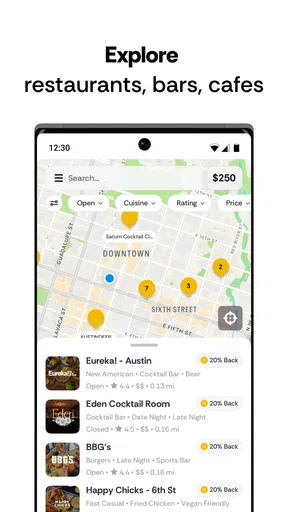
The second is coverage. A strong rating and a large install base do not guarantee that my neighborhood has the restaurants I want. The app’s long-term usefulness is local and personal. Someone in a dense dining area may find repeated opportunities, while someone outside those areas may open it only occasionally. I would test the nearby restaurant selection during the first week and make a quick decision instead of assuming future value will appear.
Group payments can create another kind of tiredness. When friends want separate checks, the reward may not be worth explaining a new payment method or calculating reimbursements. For a solo meal or a household bill, the process is easier to control. For a large group with complicated spending, a familiar payment method may be more practical even if it gives up a possible return.
There is also the risk of comparing too many choices. A restaurant app can make a simple dinner feel like a research project if I keep checking every possibility. I would give myself a short decision window: find a convenient participating restaurant, compare the total cost, and move on. If the expected benefit is small, I would stop optimizing. Saving a little money is not worth turning every meal into administrative work.
People who want broad, automatic rewards may prefer a general credit card or a bank-linked cashback program. People who want deep restaurant information may prefer a dedicated dining guide. People who want a simple loyalty relationship with one favorite restaurant may be better served by that restaurant’s own program. inKind is most persuasive for the middle ground: diners who eat at participating restaurants and are comfortable making payment through a focused restaurant-rewards service.
My long-term verdict on keeping it installed
After the initial excitement wears off, I can see a lasting role for inKind, but not as an app I would open every day. Its value is strongest as a pre-meal checkpoint. When it covers places I already like, the possible return can make an ordinary restaurant decision a little smarter without requiring a subscription or an elaborate loyalty strategy.
I would recommend it to regular diners who are willing to check participation before leaving, plan group payments in advance, and judge savings by the final bill rather than the headline percentage. It is also a sensible tool for households that eat out often enough for small returns to accumulate through normal behavior. The free price makes trying it low-risk, provided the user does not let the offers encourage unnecessary spending.
I would skip it, or at least keep it dormant, if I rarely eat at restaurants, dislike app-based payments, or live where the available choices do not match my habits. I would also avoid depending on it for a complicated group dinner unless everyone agrees on the payment plan beforehand. In those situations, a standard card, a restaurant’s own loyalty scheme, or a general cashback option may be easier and more consistently useful.
My final view is favorable but measured. inKind does not need to replace every other food app or every payment method to be worthwhile. It only needs to make a few planned restaurant visits better without adding more effort than the reward is worth. For me, that is a reasonable standard, and the app can meet it when I use it deliberately rather than chasing every available offer. Its lasting value comes from fitting an existing dining habit, not from creating a new one.
Privacy and Permissions
See what permissions an app requests and how it handles your data.
- Location
- approximate location (network-based), precise location (GPS and network-based)
- Photos/Media/Files
- read the contents of your USB storage, modify or delete the contents of your USB storage
- Storage
- read the contents of your USB storage, modify or delete the contents of your USB storage
- Camera
- take pictures and videos
- Wi-Fi connection information
- view Wi-Fi connections
- Other
- view network connections, change network connectivity, connect and disconnect from Wi-Fi, full network access, run at startup, control vibration, prevent device from sleeping
Verdict
Strengths of inKind
- Supports local restaurants while helping users save on dining costs.
- Offers flexible gift options suitable for birthdays and special occasions.
- Simple interface makes browsing participating restaurants straightforward.
- Can introduce users to independent restaurants in their local area.
- Digital gifting is convenient and avoids physical cards or vouchers.
Limitations of inKind
- Availability depends heavily on participating restaurants in your area.
- Some offers may include expiration dates or redemption restrictions.
- Savings may require dining at selected restaurants or meeting conditions.
- Restaurant participation and available offers can change over time.
- Not ideal for users who rarely eat at independent restaurants.
Similar Picks in This Category
View All
Rappi: Food Delivery, Grocery
Rappi, Inc - Delivery3.5

McDonald’s: Cupons e Delivery
Arcos Dorados4.3

Swiggy: Food Instamart Dineout
Swiggy4.7

Blinkit: Groceries & more
Blinkit4.8

foodpanda: food & groceries
Foodpanda GmbH a subsidiary of Delivery Hero SE4.0

Zomato: Food Delivery & Dining
Zomato4.7
Frequently Asked Questions
What is inKind and how does the app work?
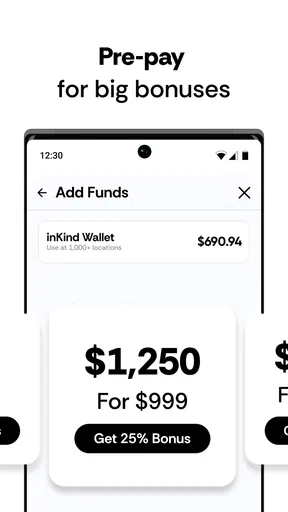
inKind is a dining and restaurant savings app that lets users discover participating restaurants, browse available offers, and pay through the platform when eligible. Depending on the promotion, you may receive a discount, cashback, or account credit. Before visiting, check the restaurant’s current offer, payment requirements, expiration date, and any restrictions so you know exactly how the savings will be applied.
Is inKind free to download and use?
The inKind app is generally free to download, and creating an account does not usually require an upfront fee. However, some benefits may involve purchasing an inKind gift card, accepting a limited-time promotion, or meeting specific spending conditions. Offers can change by location and restaurant, so review the terms shown in the app before paying or buying any credits.
Where can I use inKind, and how do I find participating restaurants?
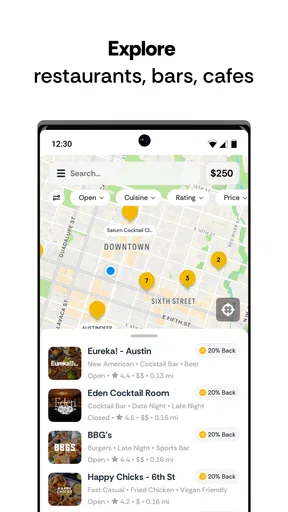
Availability depends heavily on your city and the restaurants included in inKind’s network. After enabling location access or entering a destination manually, you can browse nearby venues, view restaurant pages, and check available deals. Coverage may be stronger in larger metropolitan areas, while smaller towns may have few or no participating locations, so confirm availability before planning a meal.
How do payments, discounts, and inKind credits work?
Payment rules vary according to the restaurant and the specific offer displayed in the app. Some venues may require you to pay through inKind, while others may accept an inKind card, gift card, or promotional balance. Carefully review whether taxes, gratuity, service charges, alcohol, or minimum spending requirements are excluded, and verify the final amount before completing the transaction.
Are there any important limitations or drawbacks to know before downloading inKind?
inKind can provide meaningful restaurant savings, but it is not equally useful for every user. Offers may have expiration dates, blackout periods, minimum purchase requirements, location restrictions, or limited redemption windows. Restaurant participation and promotions can change without much notice. You should also read the app’s cancellation, refund, credit, and account policies before purchasing credits or relying on a deal.
